
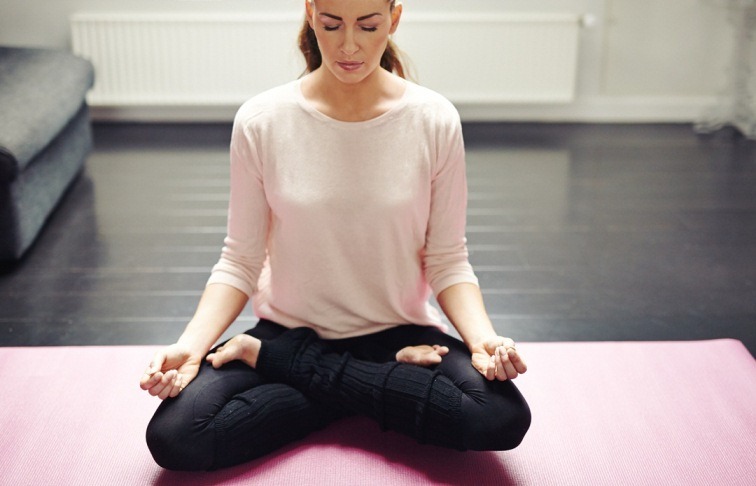

Yin yoga encourages introspection, reflection and observation of our thoughts, sensations and emotions. It invites us to rethink our relationship with movement. Today where everything is about achievement, progress and pushing boundaries, Yin yoga provides respite from this hustle lifestyle. Refreshingly different, instead of striving to perfect a pose or accomplish a specific physical goal, practitioners are encouraged to settle into shapes, observe sensations, and cultivate awareness.
Unlike more dynamic styles of yoga where alignment often takes center stage, Yin yoga focuses on functional movement, something that is given immense importance in a Yin yoga TTC. Every body is unique, and therefore every pose looks different for each individual. Here, appropriate stress is applied to the body’s connective tissues while remaining mindful of physical and mental experiences.
Let’s explore the top foundational Yin yoga poses you will learn in an online Yin yoga TTC and why they are beneficial to practitioners.
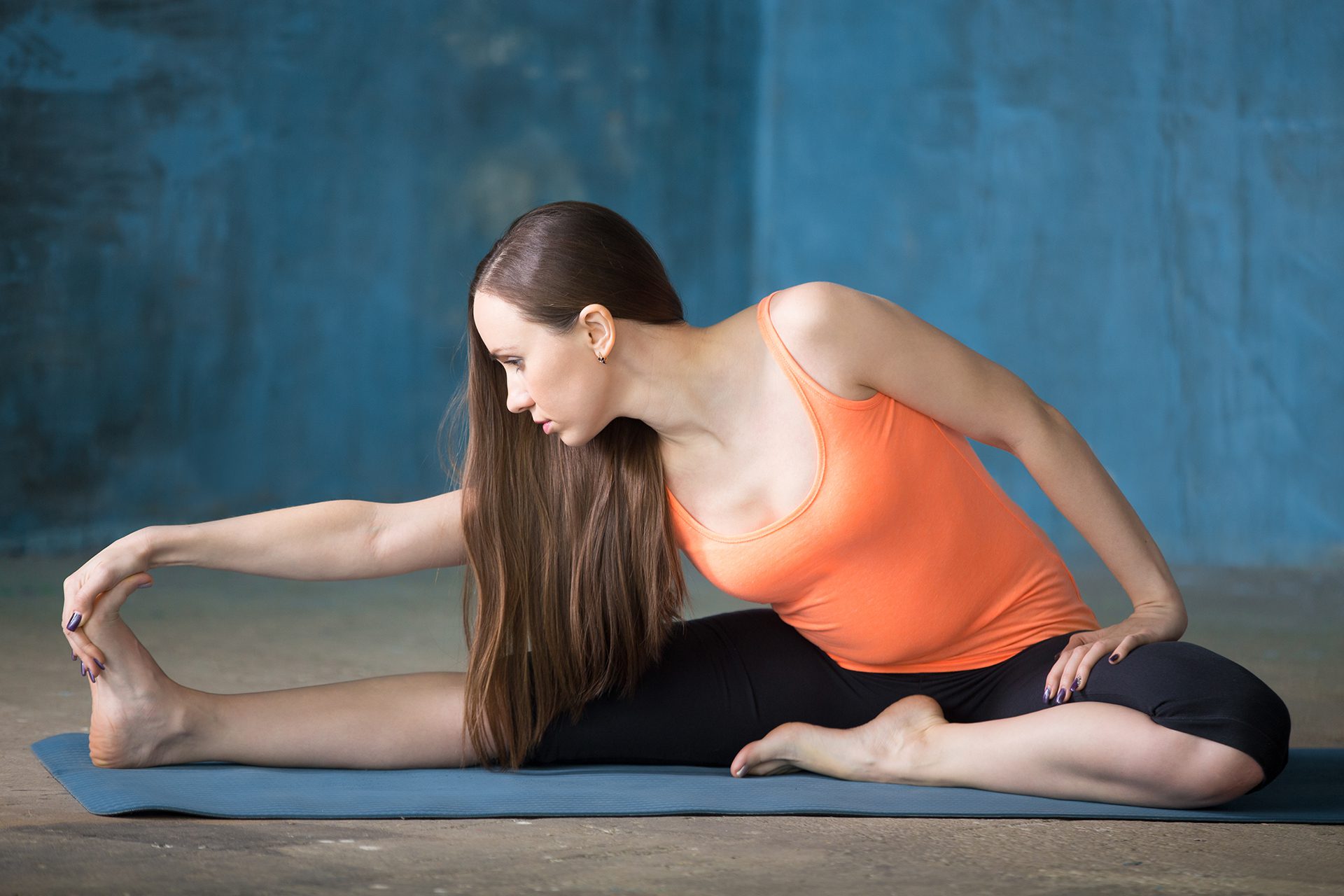
1) Caterpillar Pose
Caterpillar is a forward-folding shape in Yin Yoga. It primarily explores flexion of the spine and hips. Seated forward folds practiced in active yoga styles generally aim at straightening the spine or reaching the feet. In Caterpillar pose, practitioners are encouraged to relax, round the spine naturally, and allow gravity to do the work. During your online Yin yoga teacher training, you’ll learn how Caterpillar creates gentle stress along the back body, including the fascia surrounding the spine and hamstrings.
You will gain an understanding of the difference between sensation and pain, and you will learn how spinal flexion is beneficial when approached mindfully. The pose becomes a powerful tool for introspection, encouraging practitioners to turn inward.
2) Child’s Pose
Child’s pose is practiced as a posture for rest and recovery in active yoga styles. However, in Yin yoga, it is also practiced as an exploration of spinal and hip flexion. The pose may appear simple, but it offers an excellent opportunity to observe how the body responds when supported and surrendered. Depending on individual anatomy, variations can create different sensations in the hips, lower back, knees, and ankles.
In a Yin yoga TTC, students learn that even the most familiar poses can reveal new experiences when held for several minutes. Child’s pose acts as a valuable teaching tool, encouraging one to realize that even poses that look simple can create deep awareness.
3) Saddle Pose
Saddle pose introduces a very different functional direction. It explores extension of the spine and hips while also involving varying degrees of internal rotation. This pose is a transformative experience for students because it targets areas of the body that many rarely explore in everyday life.
There are multiple variations of Saddle which accommodate different body structures and mobility levels. The pose works on the front of the thighs, hip flexors, abdominal region, and lumbar and thoracic spine. It is important to note that not everyone is suited for the full expression of Saddle. Yin yoga highlights a key principle: adaptation of necessary modifications is more important than achieving a specific shape.
Closely related to Saddle pose are its Saddle Pose variations. These variations allow practitioners to explore different degrees of inclination and extension while providing more support and accessibility. Symmetrical and asymmetrical options also allow practitioners to achieve an equal stretch and avoid discomfort.
Yin yoga instructor training modules focus on understanding modifications because every student who attends a class brings a unique skeletal structure, history, and range of motion. These variations help you develop the confidence to teach diverse populations rather than trying to fit everyone into the same pose.
4) Dragonfly Pose
Dragonfly explores hip abduction. This is the movement of the legs away from the midline of the body. This is practiced as a wide-legged seated forward fold. Each individual may notice sensations that can vary significantly. Some may feel the pose more intensely in the inner thighs, while others notice it in the lower back or hips.
If you are planning an online Yin yoga teacher training, you will learn to view these differences as anatomical and not limitations. Dragonfly pose encourages an understanding of anatomical variations, fascial tension patterns, and the role of gravity in Yin yoga practice. The pose helps cultivate patience, acceptance, and curiosity.
5) Lateral Dragonfly
Lateral Dragonfly pose adds another functional element by combining abduction with lateral flexion of the spine. This is a side-bending variation that creates sensations along the side body, including the ribs, waist, and outer hips.
Side-body stretches are often underrepresented in modern movement practices. Lateral Dragonfly helps address this imbalance. It also provides practitioners with a fresh perspective on movement exploration.
6) Shoelace Pose
Shoelace is a classic Yin yoga pose that primarily explores hip adduction. In this posture, the legs are stacked to create a deep sensation around the outer hips and gluteal region. Depending on one’s individual anatomy, there are various modifications that can be applied to find a suitable variation of the pose.
In an online Yin yoga instructor training an important aspect that you will learn is that appearance does not determine effectiveness. Some students may sit upright while others fold forward. Some may require props while others do not. All of these variations provide a different experience, and all are equally impactful. Shoelace pose becomes a practical demonstration of functional yoga in action.
7) Butterfly Pose
Butterfly pose explores external rotation of the hips and is one of the first poses a practitioner learns in Yin yoga. It is accessible by most, making it a popular pose to explore. But beneath its simplicity is an immense amount of learning opportunity.
When held for several minutes, Butterfly pose encourages you to observe subtle changes in sensation, breath, and mental state. Butterfly pose can be adapted for different hip structures, sensitive knees, limited mobility and various teaching environments. It is a perfect example of how Yin yoga can be both gentle and profound.
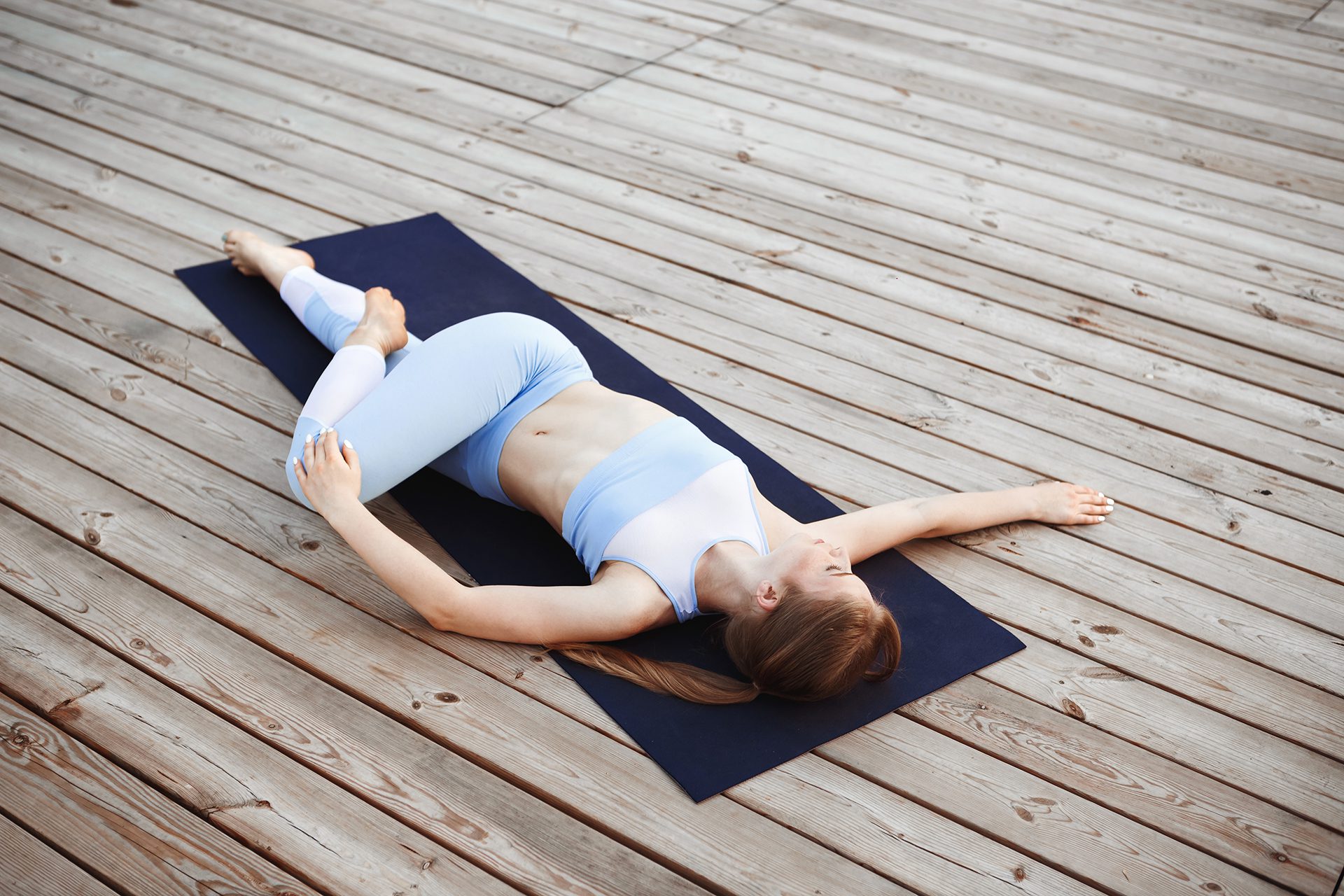
8) Lying Twist
Twisting poses introduce rotational movement of the spine. The Lying Twist is particularly valuable because gravity assists the body while allowing practitioners to remain relatively relaxed. In Yin yoga, twists are not typically approached as aggressive spinal manipulations. Instead, they provide an opportunity to explore rotational stress gradually and mindfully.
You learn how twists can influence the spine, rib cage mobility, breathing patterns and overall body awareness. The pose also offers a valuable lesson in patience, as rotational shapes often reveal asymmetries between the left and right sides of the body.
9) Swan and Dragon Variations
Swan and the various Dragon poses are some of the most comprehensive postures in Yin yoga because they explore multiple functional directions simultaneously. Depending on the variation, practitioners may experience hip flexion, hip extension, external rotation, adduction and spinal extension.
These poses give insight into how one posture can create different experiences for different individuals with immense benefits.
Dragon pose variations are particularly useful for understanding how modifications influence sensation. Meanwhile, Swan offers a deep exploration of the hips and lower body while inviting practitioners to remain present with their experience. Together, these poses help integrate functional movement principles.
Why Learning These Poses Matters
The value of studying these poses extends far beyond memorizing a sequence or learning teaching cues. These poses help online Yin yoga teacher training students understand the functional purpose behind each pose, how anatomical differences influence experience, the role of connective tissue in Yin yoga, appropriate use of props and modifications, and safe and inclusive teaching methods.
These insights form the foundation of effective Yin Yoga instruction and deepen personal practice at the same time.
For those considering an online Yin yoga teacher training career, this knowledge helps build important skills such as observation, patience, adaptability, and a willingness to honor individual differences rather than enforce rigid standards. You learn how to approach yoga through a functional lens, appreciate anatomical uniqueness, and guide others with greater confidence and compassion.
If you’re ready to deepen your understanding of Yin yoga and learn from experienced teachers in a flexible learning environment, now is the perfect time to enroll in an online Yin yoga TTC. The journey begins not with achieving a pose, but with becoming curious about what each shape can teach you.